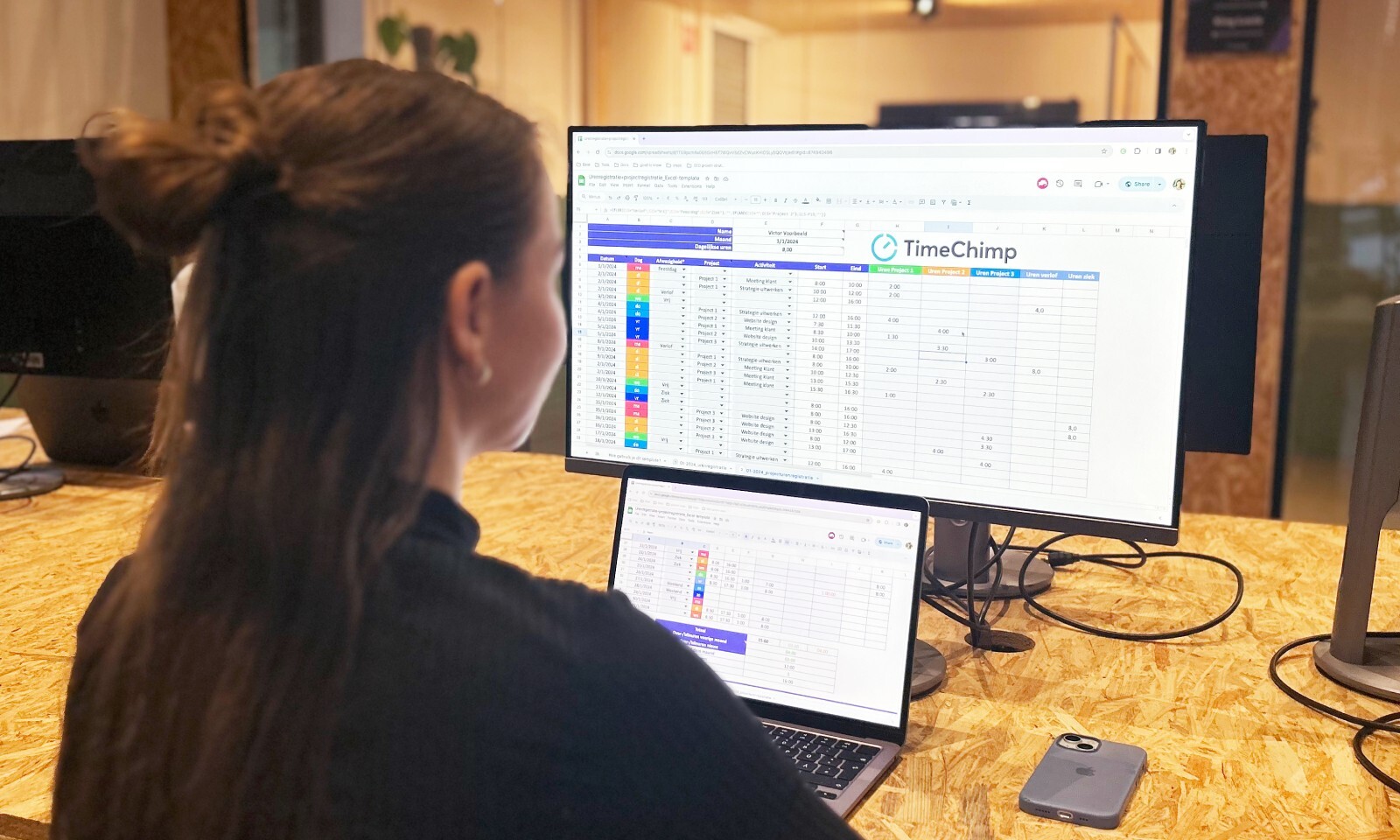


Time registration seems simple: fill in hours and you're done. Yet many people make the same mistakes, with stress and financial consequences as a result. In this blog, you'll discover the 10 biggest pitfalls and tips for avoiding them.
1. Fill in your hours too late
“I'll fill in those hours later,” we all sometimes think. But “later” often changes in days or weeks, and your memory stops cooperating. This leads to inaccurate records, frustration and unnecessary repairs.
Why this is a problem:
- Inaccuracy: Errors in billing and reporting.
- Loss of time: Reconstructing everything afterwards takes more time.
- Loss of income: Incomplete registrations miss invoices.
💡 Tip: Schedule a fixed time in your day to keep track of your hours. This keeps it up to date and you save yourself a lot of hassle.
2. Exaggerating or underestimating your hours
It seems harmless, but overestimating your hours (“I must have been working on this for 6 hours”) or underestimating can cause major problems. Exaggeration makes your invoices unreliable, while underestimation means you work for free and give away time.
What this leads to:
- Unreliable invoices: Customers trust your hours less.
- Loss of income: Underestimated hours mean less billing.
- Wasted time: Extra work to correct hours afterwards.
💡 Tip: Use a tool that tracks your time automatically. With that, you don't have to gamble and you work with concrete numbers. In at home blog, you can read more about automatic and digital time registration.
3. Forgot to register small tasks
A quick email or phone call seems unimportant, but small tasks add up faster than you think. If you forget to log these jobs, you'll unnoticed work more hours than you keep track of — and give away time you can't bill for.
What this leads to:
- Incomplete billing: Small work that adds up remains unpaid.
- Invisible workload: You work more than your grades show.
- Less insight: You don't know what your time is really spent on.
💡 Tip: Record all tasks, no matter how small they seem. Tools that automate your tasks tracking can help you with this. This way, you stay complete, work more accurately and make sure that all time counts.
4. Not distinguishing between types of hours
Not all hours are the same. Billable hours, internal meetings and administrative tasks each have their own impact. If you lump everything together, you miss important insights and run the risk of working inefficiently.
What this leads to:
- Lack of insight: You can't see how much time goes to customers or side issues.
- Less efficiency: You can't organize or prioritize your time optimally.
- Unreliable reports: Incorrect time distribution makes reports incomplete.
By categorizing your hours, you get a clear overview: how much time do you spend with customers? How much goes to peripheral issues? These insights help you work more efficiently and set your priorities.
📚 Read this blog if you want to know more about the difference between declarability and productivity?
5. Do not register breaks
Want to have a quick lunch at your desk or skip a coffee break? It seems like you're working non-stop, but that's often not the case. Unregistered breaks cause inaccurate hours and can make your workday look more skewed than it is.
What this leads to:
- Inaccurate hours: Your numbers don't match reality.
- Improper workload: It seems like you're working more than you do.
- Long-term stress: Not taking breaks damages your health.
If you don't record breaks, your hours may become inaccurate. It can also seem like you're working harder than you're actually doing, which causes long-term stress. Take your breaks and record them. Not only is it fair but also healthy.
6. Using legacy systems
Are you still working with pen and paper or a complicated Excel file? Then you'll make mistakes faster and waste an unnecessary amount of time. Modern time registration tools make the process easier, save time and prevent errors.
Consequences of outdated systems:
- More errors: Manual processes increase the risk of mistakes.
- Loss of time: Administration takes longer than necessary.
- Working inefficiently: You're missing out on smart automations.
📚 Want to know more? Read how here digital tools can help your business.
7. Not linking hours to accounting systems
Many companies register their hours but do not link them to their accounting system. This makes the process cumbersome and less efficient. However, a link offers many advantages.
What a link results in:
- Save time: Recorded hours are automatically linked to the correct ledger accounts.
- Fewer errors: Manual entry disappears, ensuring accurate administration.
- Invoice faster: Convert hours directly into detailed and error-free invoices.
💡 Hint: By connecting your time registration tool to your accounting system, you work more efficiently, get immediate insight into your figures and always keep your administration up to date.
8. Not making your hours transparent
Registering your hours is step one. But if you don't do anything with that data, you're missing out on an opportunity to work smarter. Insight into your hours helps you see where your time is really going. Are you spending too much time on unproductive tasks? Or could something be more efficient? By analyzing your hours, you will discover opportunities for improvement and growth. In addition, well-kept hours meet the requirements of the tax authorities.
📚 In this blog, you can read more about the rules on time registration of the tax authorities?
Link your time registration to Power BI**
Do you want to get even more out of your time registration? Connect your data to Power BI. With Power BI you visualize your data in clear dashboards and graphs. This way, you can see at a glance how time is spent, where bottlenecks lie and which processes you can optimize. This not only helps you work smarter, but also to make strategic decisions that contribute to the growth of your company.
9. No clear agreements within your organization
A good time registration process starts with clear agreements. Make sure everyone in the organization understands why time registration is important and what is expected of them.
Communicate clearly to your team
Define which tasks need to be registered, how detailed the descriptions should be, and when the hours should be entered at the latest (e.g. daily or weekly). Also agree on the use of tools: who is responsible for keeping, approving and controlling the registered hours?
Prevent confusion and errors
By clearly communicating and recording these guidelines, you can prevent confusion, avoid mistakes and create a consistent way of working within your team. A short manual of training can help to get everyone on the same page.
10. Not using a mobile app
Why wait until you're sitting at your computer to record your hours? With a mobile app you can keep track of your time anytime, anywhere. Whether you're on the way to a customer, working on location or completing a task at home, an app makes time registration immediately accessible.
A good mobile app ensures that you don't forget anything. With just a few taps, you can enter tasks, link activities to projects, and even start timers for real-time recording.
Conclusion
Time registration does not have to be a headache file. By recognizing (and avoiding) these errors, your process becomes simpler, faster, and more accurate. With the right tools and a few smart habits, you can get the most out of your time registration.
Try gentleman 14 days free!